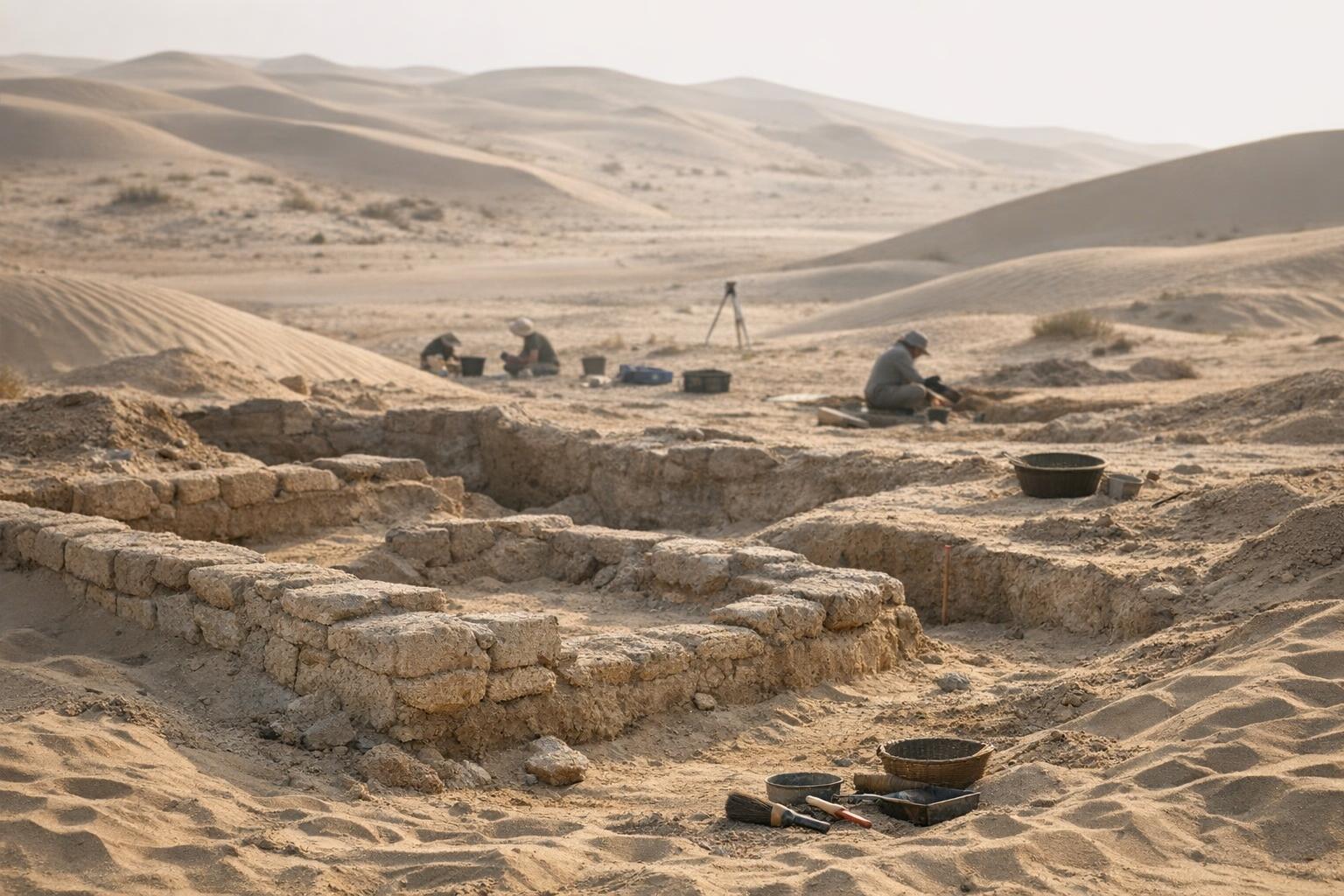
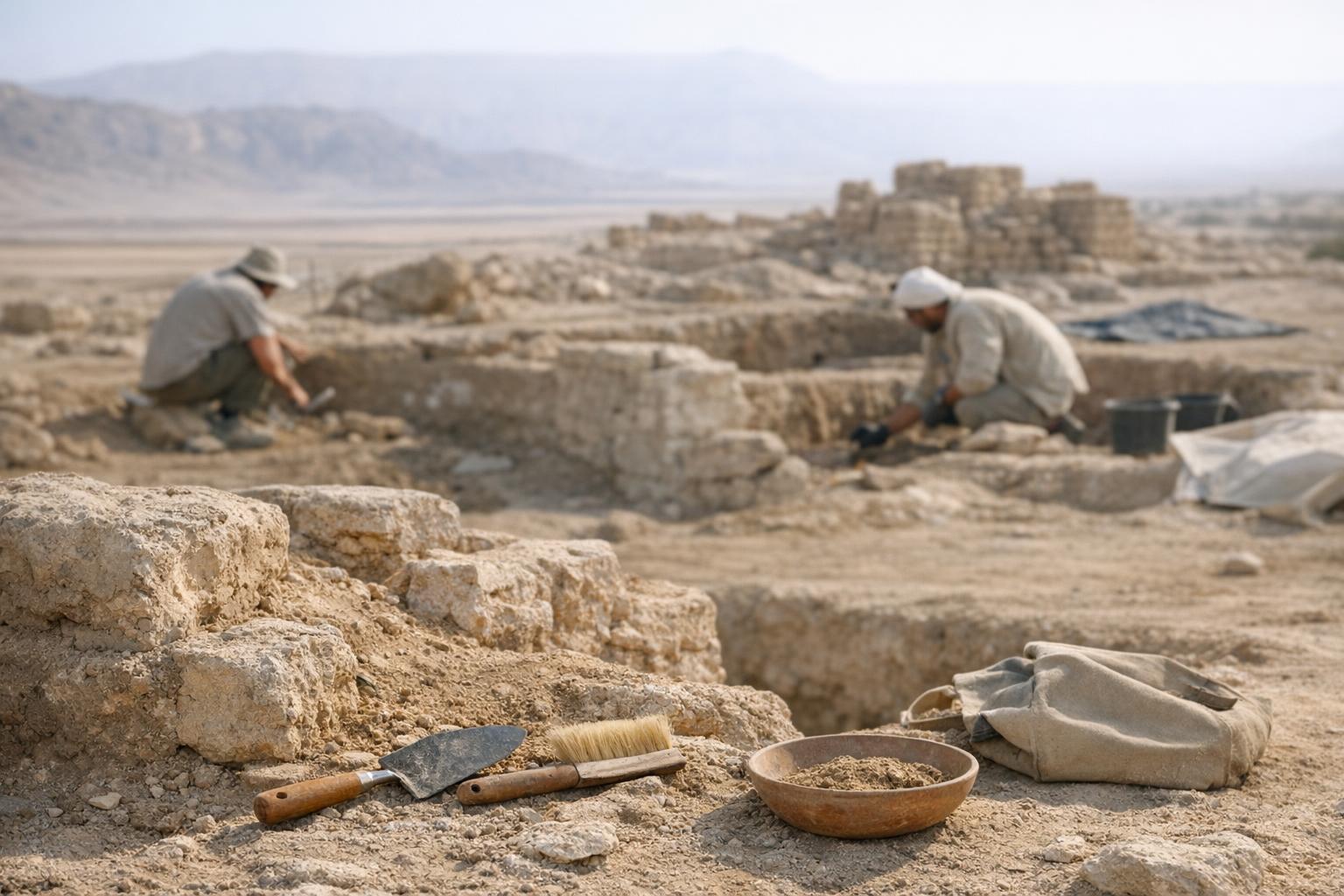
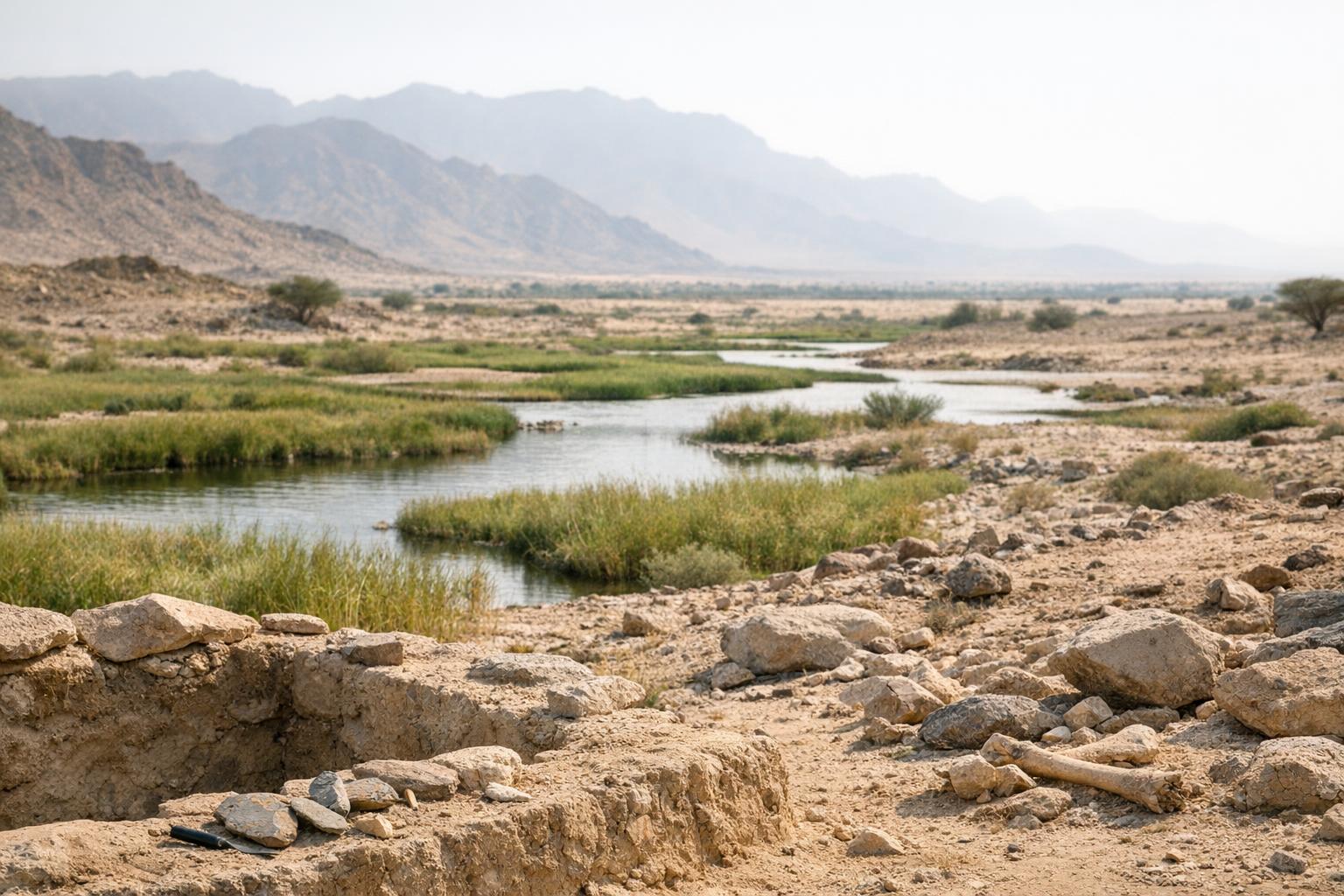
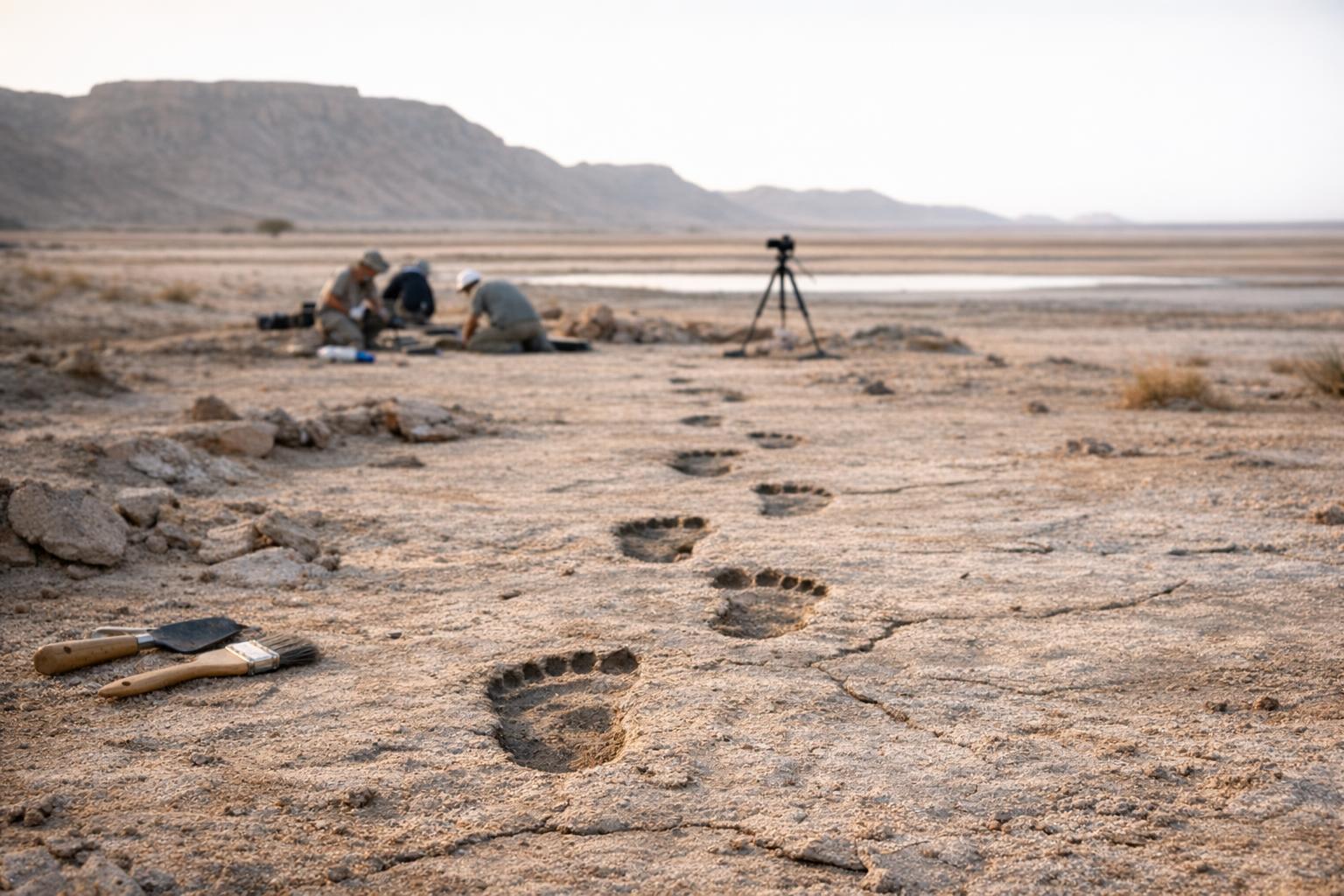
In the vast, arid expanses of Saudi Arabia, a recent archaeological discovery has captured the world's attention: a 120,000-year-old trail of human footprints. These ancient impressions offer a rare glimpse into the lives of early humans and their movements across the Arabian Peninsula.
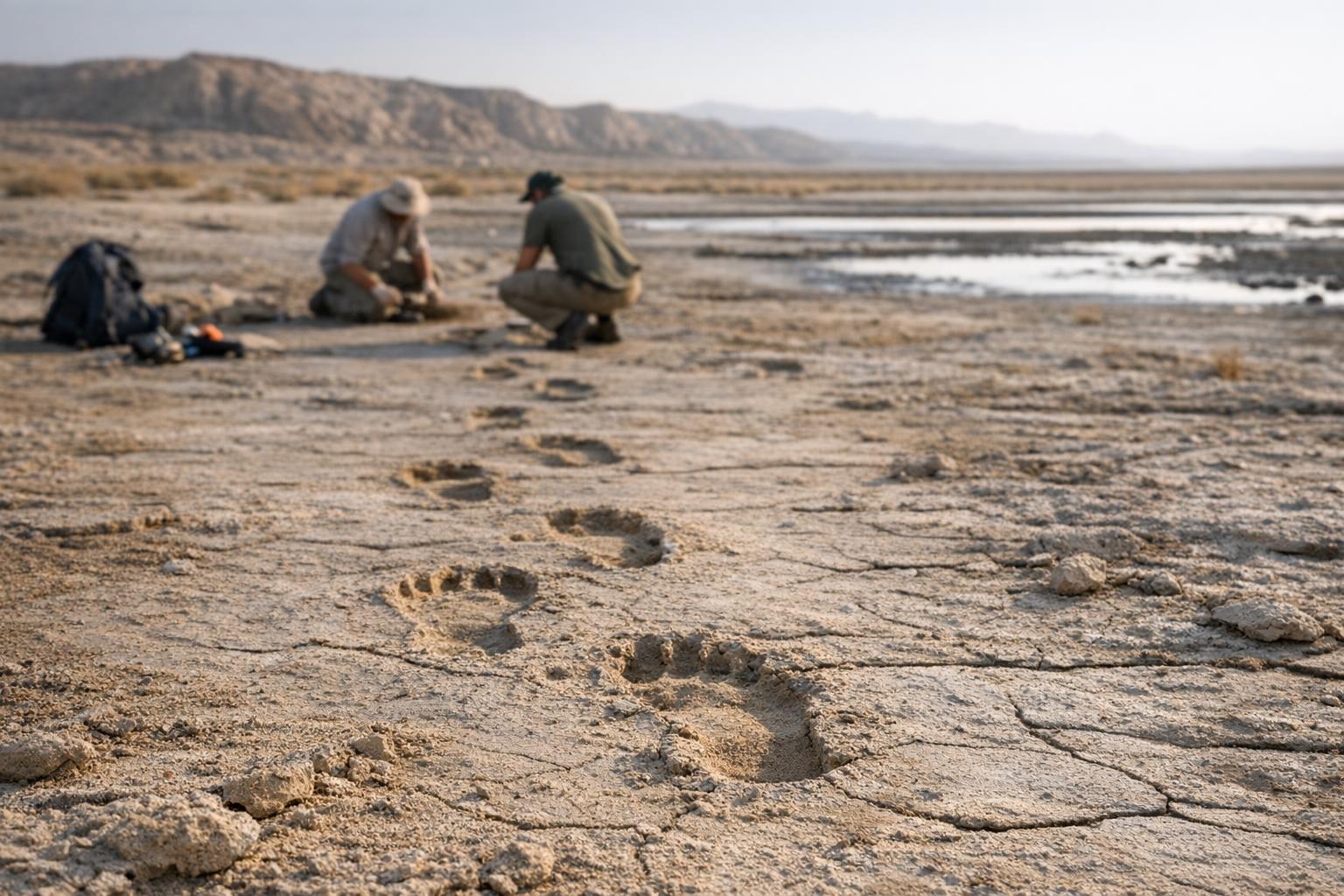
The discovery of these footprints was made in the Nefud Desert, a region once teeming with life, now transformed into a barren landscape. The footprints were preserved in what used to be a lake bed, offering a snapshot of a time when the environment was drastically different. This site not only provides evidence of human presence but also hints at the rich biodiversity that supported these early communities.
Tracing Ancient Steps
A Window into the Past
This find is particularly significant because it fills a crucial gap in our understanding of human migration. The Arabian Peninsula is often overlooked in discussions about early human dispersal, with more focus traditionally placed on Africa and Europe. However, these footprints suggest that the region was an important corridor for early humans moving out of Africa.
Field researchers, equipped with cutting-edge technology, have meticulously documented these footprints, capturing high-resolution images and 3D models. These tools allow scientists to analyze the prints in detail, determining aspects such as the age, size, and even the pace and gait of the ancient travelers.
Giving Voice to Our Ancestors
Implications for Modern Science
The story of these footprints is not just about the scientific data they provide; it is also about the human stories they represent. These impressions are a direct link to our ancestors, offering a tangible connection to those who walked these lands so long ago. They remind us of the resilience and adaptability of early humans in their quest for survival.
The implications of this discovery extend beyond archaeology. Understanding the routes and strategies of ancient human migrations can inform current models of human evolution and adaptation. It provides insights into how early humans responded to climatic changes, which is increasingly relevant as we face our own environmental challenges.
Continuing the Journey of Discovery
Globally, this discovery highlights the interconnectedness of human populations and the shared history that spans continents. It underscores the importance of the Arabian Peninsula as a crossroads of ancient civilizations, offering new perspectives on the paths that shaped human history.
While these footprints have answered some questions, they also open up new avenues for research. Further exploration is needed to uncover more about the people who left these marks and the world they inhabited. What other secrets lie beneath the sands of Arabia, waiting to be unearthed by future explorers?
As we continue to unravel the mysteries of our past, the footprints in Saudi Arabia serve as a reminder of humanity's enduring spirit of exploration. They inspire us to look beyond the horizon and delve deeper into the unknown, driven by the same curiosity that propelled our ancestors.
The Explorers Club Middle East Chapter invites you to join us on this journey of discovery. Through our expeditions and research, we aim to advance our understanding of the region's rich history and contribute to the global dialogue on human evolution. Follow our work and become part of a community dedicated to uncovering the secrets of our shared past.